
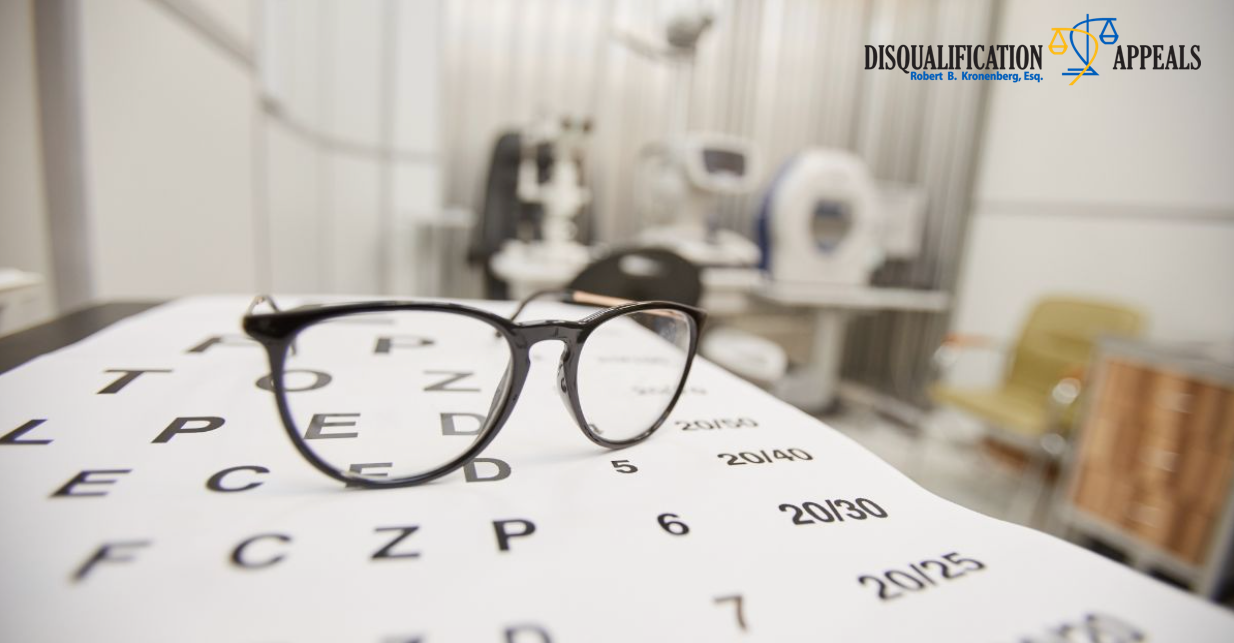
NYPD vision requirements can feel intimidating. This is especially true if you wear glasses, use contact lenses, have had corrective eye surgery, or recently had a vision-related concern during the hiring process. A failed vision test does not always mean the process is over, but it does mean the issue needs to be handled carefully and quickly.
The New York City Police Department’s medical assessment includes a vision test. Candidates are tested separately in each eye, and the department evaluates corrected vision, uncorrected vision, and color vision.
Disqualification Appeals assists candidates in New York City, Nassau County, and Suffolk County with NYPD medical disqualification appeal matters, including vision-based disqualifications. If you have received a Notice of Proposed Disqualification (NOPD) or other notice tied to your eyesight, the right response depends on the standard being applied, the records available, and the deadline in the notice.
What Are the NYPD Vision Requirements?
The NYPD medical assessment requires candidates to meet specific visual acuity standards. According to NYPD hiring guidance, candidates must have 20/30 or better corrected vision and at least 20/100 or better uncorrected vision, with each eye tested separately. Candidates who wear glasses or contact lenses must bring them to the medical examination.
Color vision is also evaluated. NYPD guidance states that color deficiency corrective devices are prohibited during the evaluation. New York State police officer candidate standards include color perception testing and provide additional procedures for candidates who believe an unacceptable color perception result is incorrect.
Can You Become an NYPD Officer With Bad Vision?
In many cases, yes. A candidate who wears glasses or contact lenses may still qualify if their vision meets the required corrected and uncorrected standards. Wearing corrective lenses is not automatically disqualifying.
The issue becomes more serious when the candidate’s uncorrected vision falls below the required threshold. It can also be concerning if the corrected vision does not meet the standard. Additionally, color perception testing can raise concern, as can if the department identifies an eye condition that may affect the candidate’s ability to perform the job safely.
Corrected Vision vs. Uncorrected Vision
Corrected vision is vision measured while using glasses, contact lenses, or another permitted correction method. Uncorrected vision is vision measured without any such assistance.
For NYPD candidates, both measurements matter. NYPD guidance says candidates must have 20/30 or better corrected vision and at least 20/100 or better uncorrected vision, with each eye tested separately. New York State standards similarly state that candidates should have vision better than or equal to 20/30 in each eye. If corrective lenses are needed to meet that standard, uncorrected vision should be no worse than 20/100 in each eye.
What Happens During the NYPD Vision Test?
The vision portion of the NYPD medical assessment evaluates whether the candidate meets the department’s eyesight standards. The exam may include corrected vision, uncorrected vision, and color vision screening. Candidates who wear glasses or contact lenses should bring them to the examination.
New York State standards recognize the Snellen test as the generally accepted standard for visual acuity. For color perception, the standards identify the 24-plate edition of the Ishihara test or an equivalent edition. If a candidate’s color perception is deemed unacceptable and the candidate believes the result is incorrect, the standards describe recourse to additional Farnsworth-Munsell 100-Hue testing under specific conditions.
How to Respond to a Vision-Based Notice of Proposed Disqualification
A vision-based Notice of Proposed Disqualification should be reviewed immediately. For medical and psychological proposed disqualifications, DCAS guidance says the candidate is given an opportunity to oppose the proposed disqualification, authorize release of the file to a licensed professional, or withdraw from the process for that exam.
The candidate is instructed to respond within 30 days. If the candidate chooses the professional-review route, the designated licensed professional may receive the file directly from the hiring agency or its designee. After that file is sent, the professional has 60 days to submit a report or additional documentation to the hiring agency.
For a vision-based medical disqualification, useful materials may include updated eye exam results, ophthalmologist, or optometrist reports. Additionally, records related to glasses or contact lenses, surgical records for LASIK or PRK, color vision testing, or a medical opinion can help. The opinion should explain whether the candidate can perform the essential functions of the job. If the notice also raises concerns from the character assessment, the candidate should address those issues separately instead of treating the response as only a medical disqualification.
What if the Medical Disqualification Becomes Final?
A medical disqualification appeal lawyer, such as our team at Disqualification Appeals, can help review the notice, identify the standard being applied, and determine what documentation may be needed. For vision-related issues, the response may require coordination with an eye-care specialist. It might also need a review of medical testing. In some cases, a clear explanation of why the candidate meets the standard or can perform the essential functions of the position is needed.
Candidates should read the notice carefully because not every matter goes to the same review body at the same stage. The notice should control the next procedural step.
How a Medical Disqualification Appeal Lawyer Can Help
A medical disqualification appeal lawyer, such as our team at Disqualification Appeals, can help review the notice, identify the standard being applied, and determine what documentation may be needed. For vision-related issues, the response may require coordination with an eye-care specialist. It might also need a review of medical testing. In some cases, a clear explanation of why the candidate meets the standard or can perform the essential functions of the position is needed.
If you received a vision-based Notice of Proposed Disqualification or final Notice of Disqualification, contact Disqualification Appeals to discuss your next steps.
Frequently Asked Questions
What are the NYPD vision requirements?
NYPD hiring guidance says police officer candidates must have 20/30 or better corrected vision. They must also have at least 20/100 or better uncorrected vision. Each eye is tested separately. Color vision is also evaluated during the medical assessment.
Can you become an NYPD police officer with glasses or contacts?
Yes, wearing glasses or contact lenses does not automatically disqualify a candidate. Candidates who wear corrective lenses must bring their glasses or contacts to the medical examination. They will still need to meet the applicable corrected and uncorrected vision standards.
Can LASIK or PRK help after a vision-based NYPD disqualification?
LASIK or PRK may help some candidates meet vision standards, but surgery is not a universal solution. A candidate may need records showing the procedure, recovery, visual stability, and current acuity. They might also need to show whether any complications affect the ability to perform police officer duties.
What happens if you fail the NYPD color vision test?
Color vision is evaluated during the NYPD medical assessment, and color deficiency corrective devices are prohibited. New York State standards identify additional testing procedures when a candidate disputes an unacceptable color perception result.
How do you appeal a vision-based NYPD medical disqualification?
The appeal process depends on whether the candidate received a Notice of Proposed Disqualification or a final Notice of Disqualification. A proposed medical disqualification may allow the candidate to submit additional documentation. They can also authorize file release to a licensed professional or withdraw from the exam process. A final disqualification may trigger appeal rights to the Civil Service Commission if the matter is properly before the Commission.